
Discover how structured cabling impacts your office network setup. A strong cabling foundation is essential for reliable network performance and growth.

October 29, 2026
Hiring more help desk staff rarely solves recurring IT outages. The real improvement in uptime comes from redesigning your business IT network, not just adding support.
The common assumption is that outages get fixed by adding more support staff. In practice, the staffing rarely changes anything, because the failures start somewhere support can't reach: the network's own design.
That gap matters because the cost of an outage lands immediately—lost sales, frustrated clients, and teams sitting idle until systems return. Every minute offline can mean lost revenue and eroded trust, so the instinct to throw people at the problem makes sense on the surface.
The trouble is that people can only respond to symptoms. A help desk answers the phone faster, but it can't rewire a network that was never built to hold up. The design underneath is what decides whether outages keep coming back, which means fixing them for good starts with understanding why they happen in the first place.

More hands on deck feels like it should resolve IT issues faster, and sometimes it does, briefly. But when the network itself runs on outdated or poorly planned infrastructure, support teams end up fighting the same fires on a loop.
That's because support staff can only react to problems as they surface. If the business IT network carries bottlenecks, misconfigurations, or single points of failure, those weaknesses resurface no matter how quickly anyone answers a ticket. The help desk ends up functioning as a patch, not a fix.
So the real work has to happen upstream, in the network design itself: how systems connect, how data moves, where the vulnerabilities sit. Skip that step and the same problems get paid for again and again, just with a different name on the ticket.
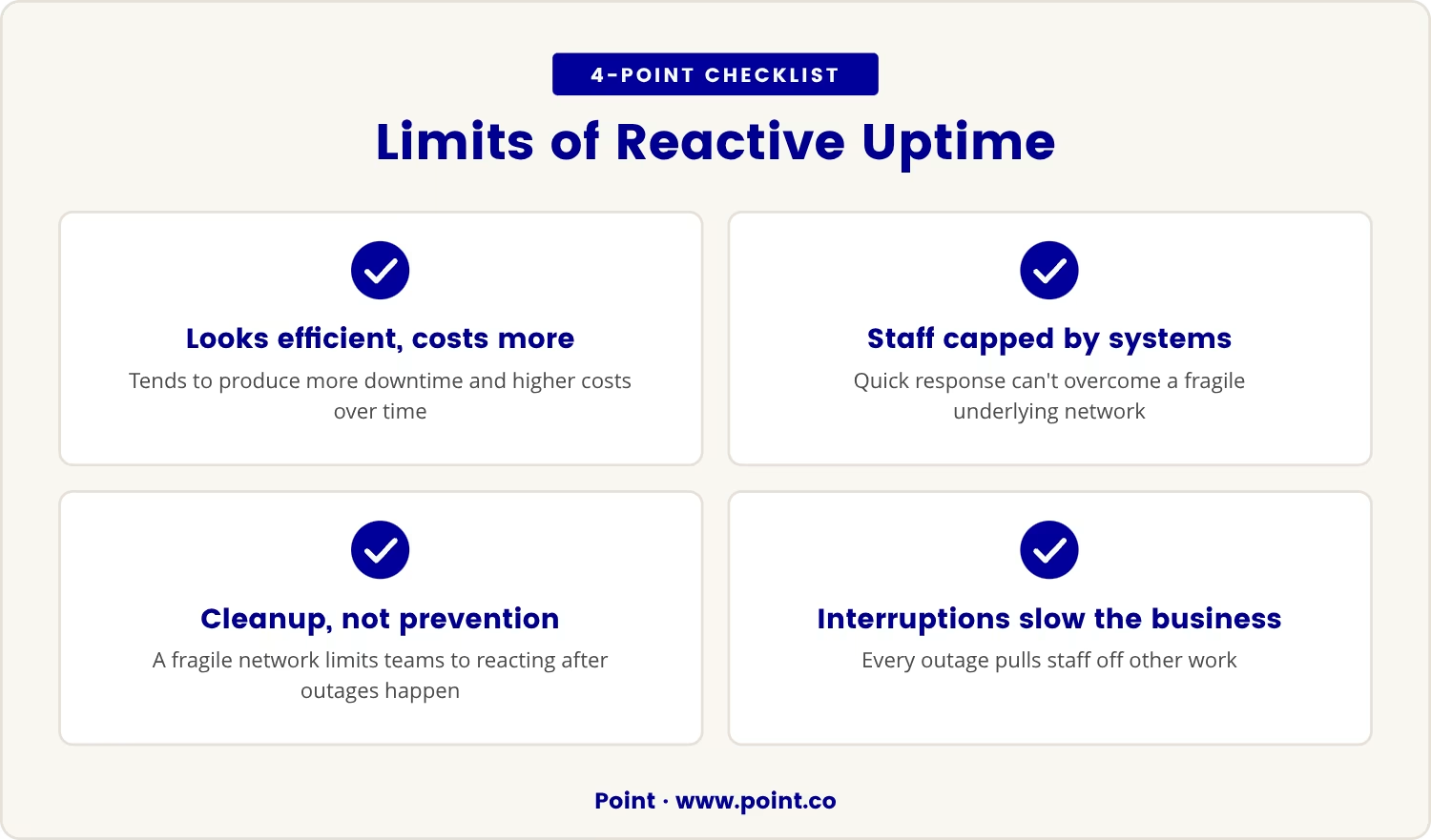
A reactive approach waits for something to break before touching it. It looks efficient on paper, but in practice it tends to produce more downtime and higher costs over time.
Support staff can respond quickly, yet their effectiveness is capped by the systems underneath them. A fragile network means even a sharp team can only clean up after an outage, not stop it from happening.
That cycle drains resources in a way that compounds. Every outage pulls staff off other work, and repeated interruptions slow the whole business down. Eventually, this reactive pattern costs more than building a better network would have from the start.
A network built for reliability does more than cut down support tickets. It changes the daily rhythm of how a business runs.
When systems are planned with redundancy, clear data paths, and current security measures, outages stop being routine. Support staff shifts from constant firefighting to proactive improvement, which frees up time and lets the business grow without technical debt holding it back.
That shift matters even more for businesses in New York City, where competition is tight, and downtime carries a real price. The right business IT solutions turn a stable network into a platform for growth, not just a hedge against problems.
Redesigning a business IT network sounds like a heavy lift, but it breaks down into a handful of concrete areas.
Start by mapping existing systems end to end. Flag outdated hardware, unsupported software, and any single points of failure.
Build backup systems and alternate data paths so one failure doesn't take everything down with it. This is the foundation disaster recovery depends on.
Modern threats call for modern defenses. Review cybersecurity measures and bring them up to date against today's risks.
Make sure information moves efficiently between departments and locations. Clear out the extra steps and bottlenecks slowing things down.
Cloud-based tools add flexibility and cut the need for on-site hardware, which also makes scaling up or down far simpler.
Test the network regularly to catch issues before they turn into outages. Monitoring tools can flag potential problems early, while they're still small.
Spotting the support-staff cycle early is easier with a short list of warning signs in hand.
Spotting more than one of these is usually the cue to stop hiring and start looking at the network itself.
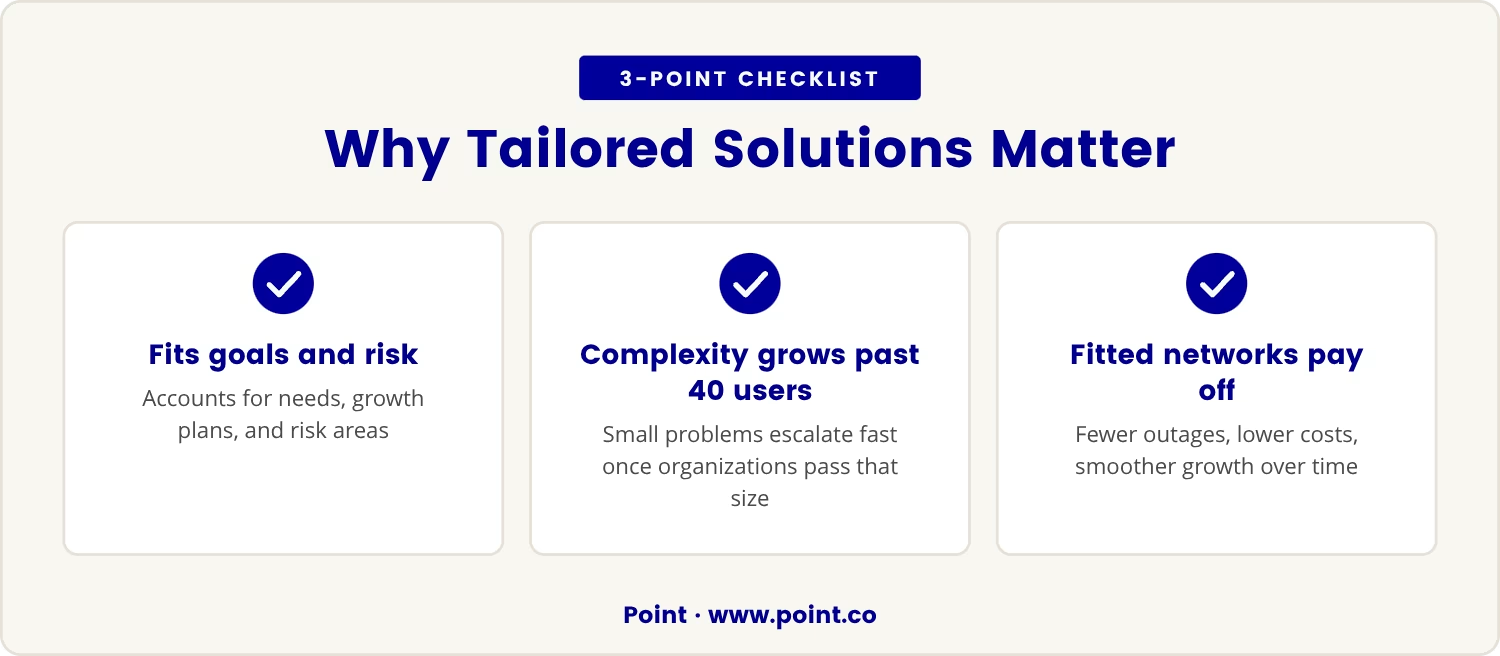
No two businesses run the same way, and that difference matters most in how their IT networks are built. It's why a tailored approach tends to outperform simply growing the support team.
A custom approach accounts for specific needs, growth plans, and risk areas, so the network supports business goals instead of dragging against them. That distinction sharpens for organizations with 40 or more users, where added complexity means small problems escalate fast.
A network fitted to the business it serves means fewer outages, lower costs over time, and a smoother road to growth.
Adding support staff as issues crop up feels like the easy move. Over time, though, it gets more expensive and less effective, since each new hire adds to payroll without touching the underlying problem.
Worse, recurring outages chip away at reputation with clients and partners. Lost productivity, missed deadlines, and security incidents all stack up, and the final bill for poor network design dwarfs the cost of fixing it.
Anyone who hasn't reviewed their network setup recently might ask: is the same problem getting paid for over and over? If the answer is yes, a different approach is worth considering.

Many organizations with 15 to 200 users, especially those scaling past 40, find themselves stuck in a cycle of recurring outages and rising support costs. At Point, we understand how frustrating it is to keep solving the same IT problems without seeing real improvement.
If you’re ready to break that cycle, let’s talk about how our team can help you rethink your network design and build a more reliable foundation for your business.
Qualifying businesses can receive up to $5,000 in free network upgrades to address the root causes of downtime and improve reliability.
Claim your free network upgrade
Frequent outages, recurring problems, or trouble scaling systems point to a full network assessment as the right first step. Minor updates can patch small issues, but problems that keep returning usually mean the root cause needs a redesign, not another patch.
Tailored solutions are built around specific business needs, which makes them more effective and efficient in practice. Off-the-shelf options often miss unique challenges or growth plans, leaving gaps that turn into bigger issues later.
Yes. Moving key systems off-site through cloud services adds flexibility and reliability, often with built-in redundancy and automatic updates that help prevent outages and keep operations running smoothly.
A proactive approach prevents problems before they happen through regular monitoring, maintenance, and upgrades. That cuts down on emergencies and lets support staff focus on long-term improvements instead of constant troubleshooting.
Look for experience in network design, cybersecurity, and disaster recovery, paired with clear communication and a track record of reliability. The right provider offers solutions sized to match the business's scale and goals.